

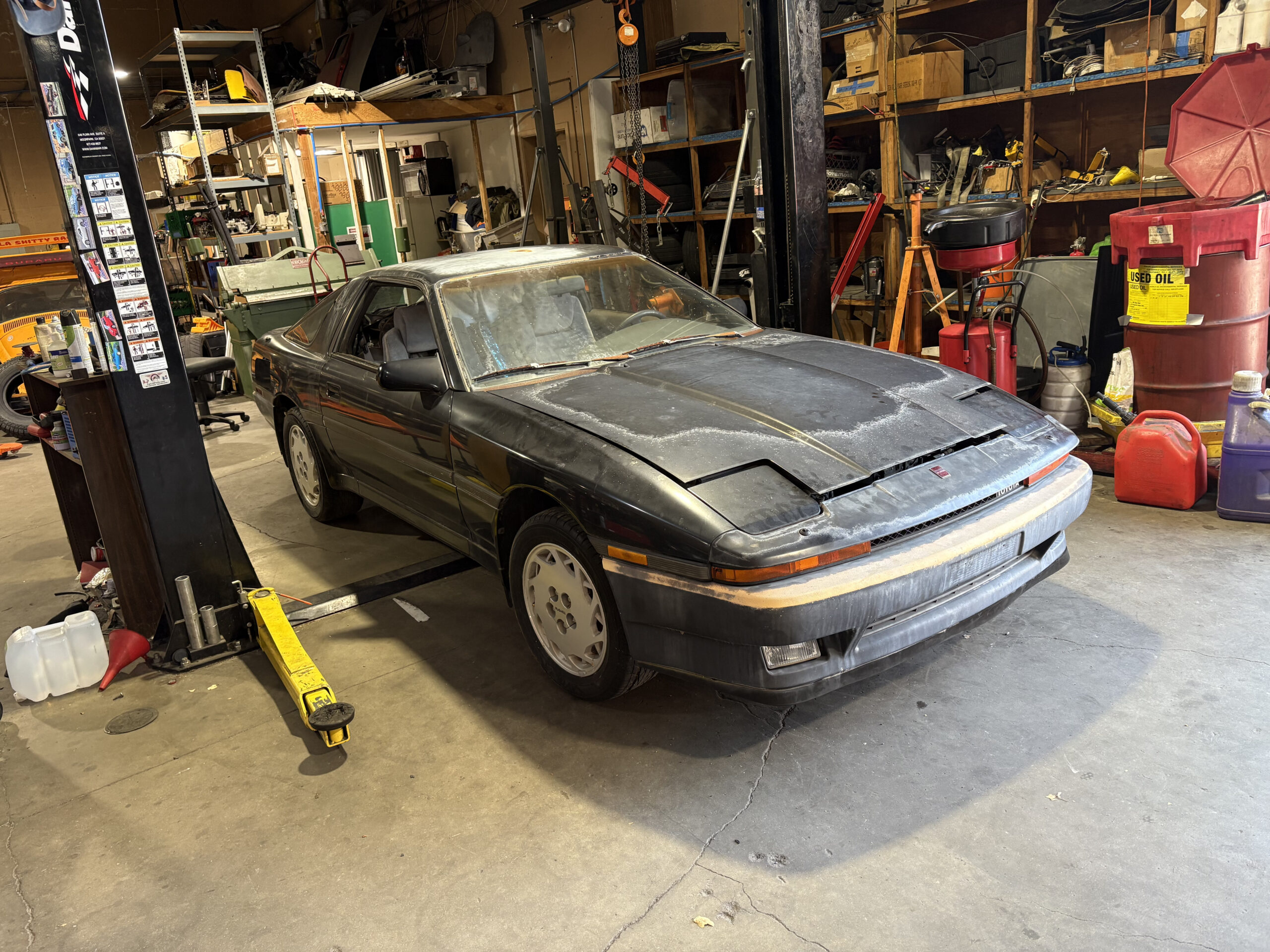
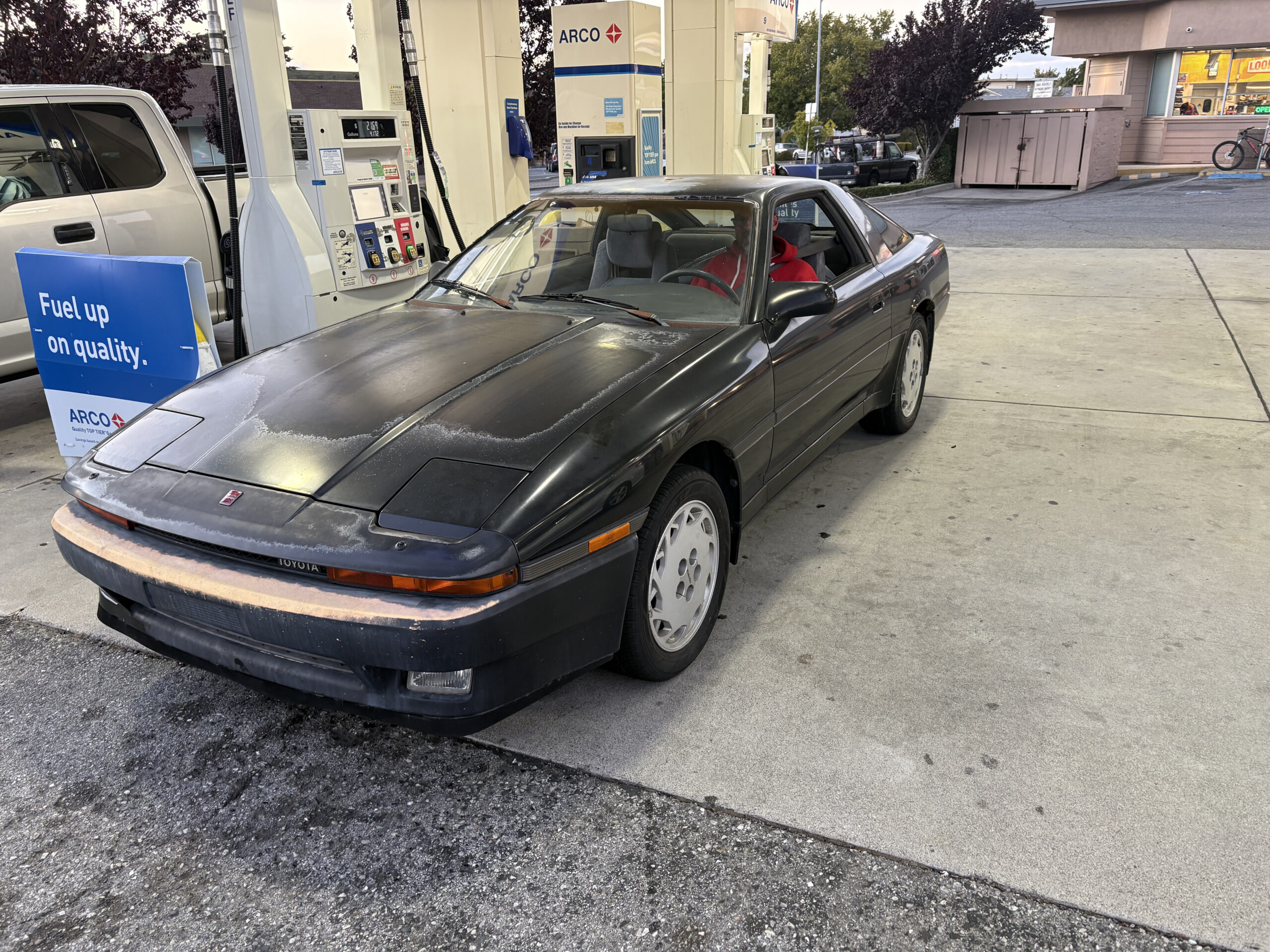
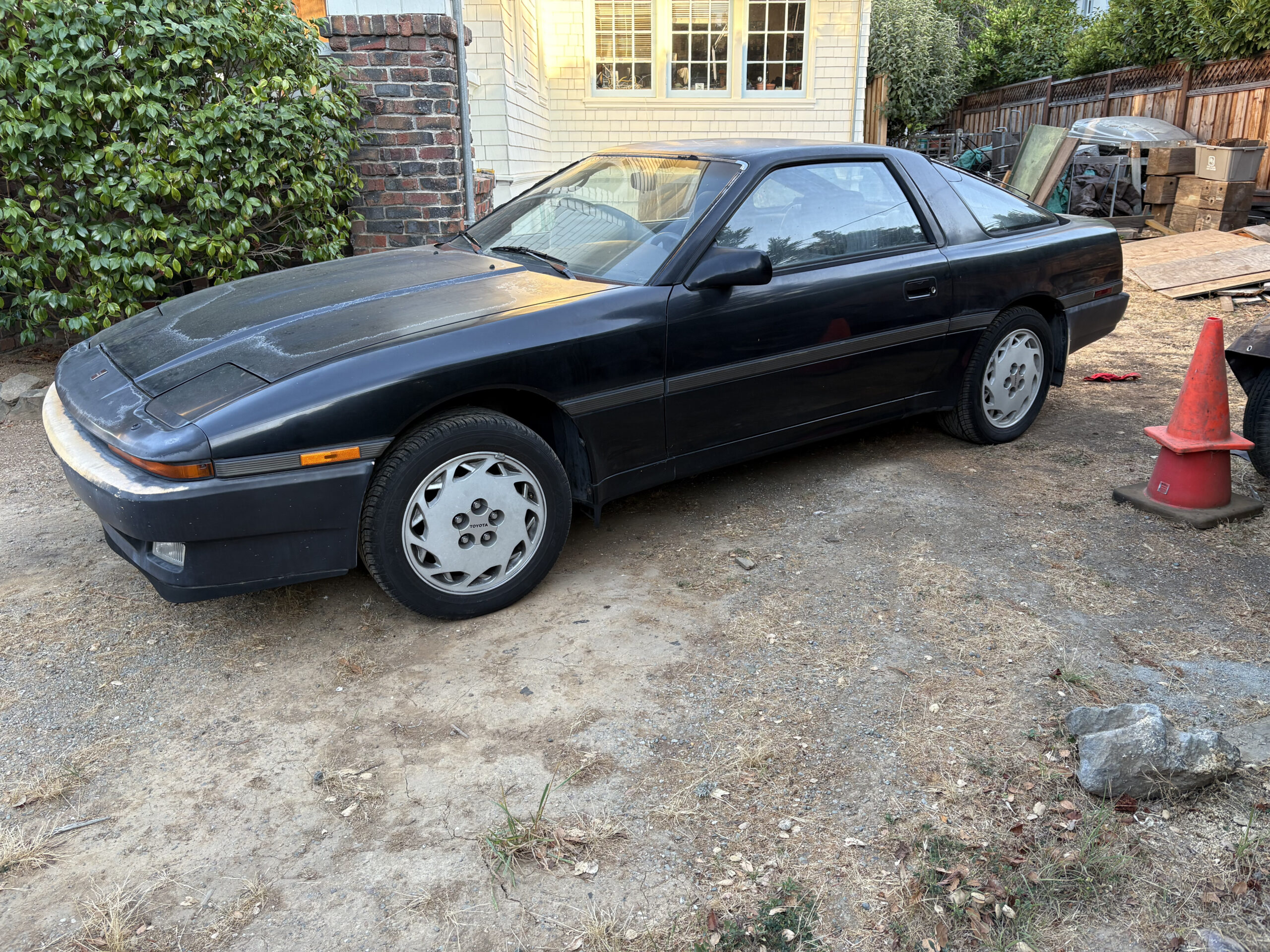
Certain cars you cross paths with that pique your interest, and there’s no rationale to the matter. In this case it’s a family friend’s 1986.5 (yup–the decimal matters here) Toyota Supra MK3 that has been sitting for the better part of two decades. Is it the good one, aka the Turbo? Nope, try again. Sometimes logic gets tossed out the window entirely and you want to give a car another lease on life. So here’s the story of bringing Wayne’s Toyota Supra back to life.
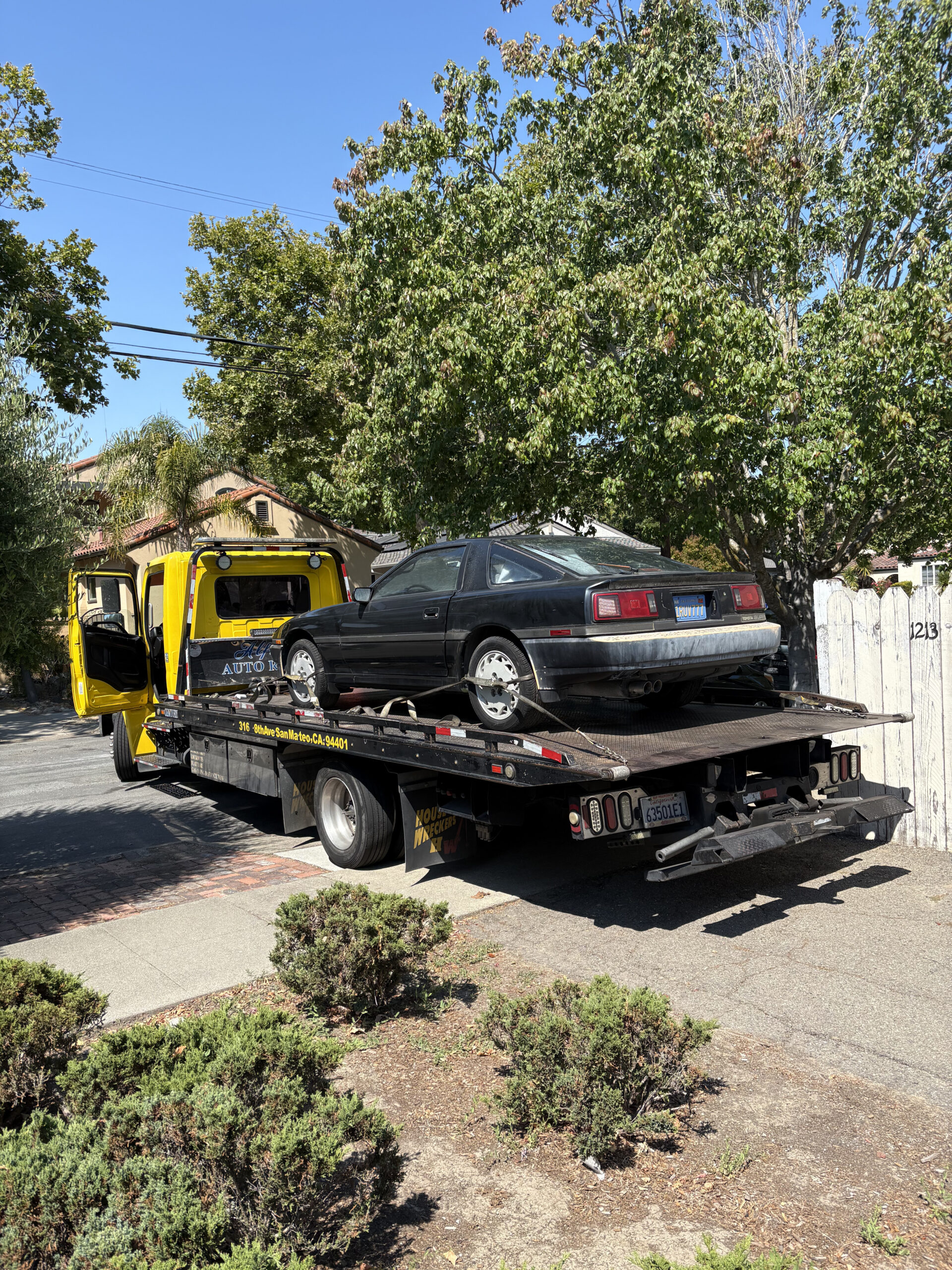
Like most of us, life gets in the way and cars and other toys get pushed to the wayside. This particular Toyota Supra experienced just that. It was bought brand new by Wayne back in 1986 and served as his daily driver for many years. Then the usual story of the car getting kicked out of the garage and “ran when parked” transpired. Having recently had to help move it into storage, we learned that it would no longer start. Eventually we asked if he’d be open to us tinkering on it to get it running again, and the day came one Saturday when it was loaded onto the tow truck and sent to our shop.
No-Start Diagnosis
When the Supra was unloaded from the tow truck, Wayne had a new battery on hand to see if it would start. Unfortunately the car just cranked and cranked but wouldn’t fire. Initially we checked for the vitals of fuel and spark, and we were able to get the car to bark to life momentarily with starter fluid, so fueling was the prime suspect. Some internet digging said the 7M engine of this era has a mildly convoluted relay system that can be bypassed to power the fuel pump. After trying the paperclip diagnostic port jumper trick as suggested online, all I got in return was an angry buzzing relay and a car that still refused to fire. Time to investigate the fuel pump.
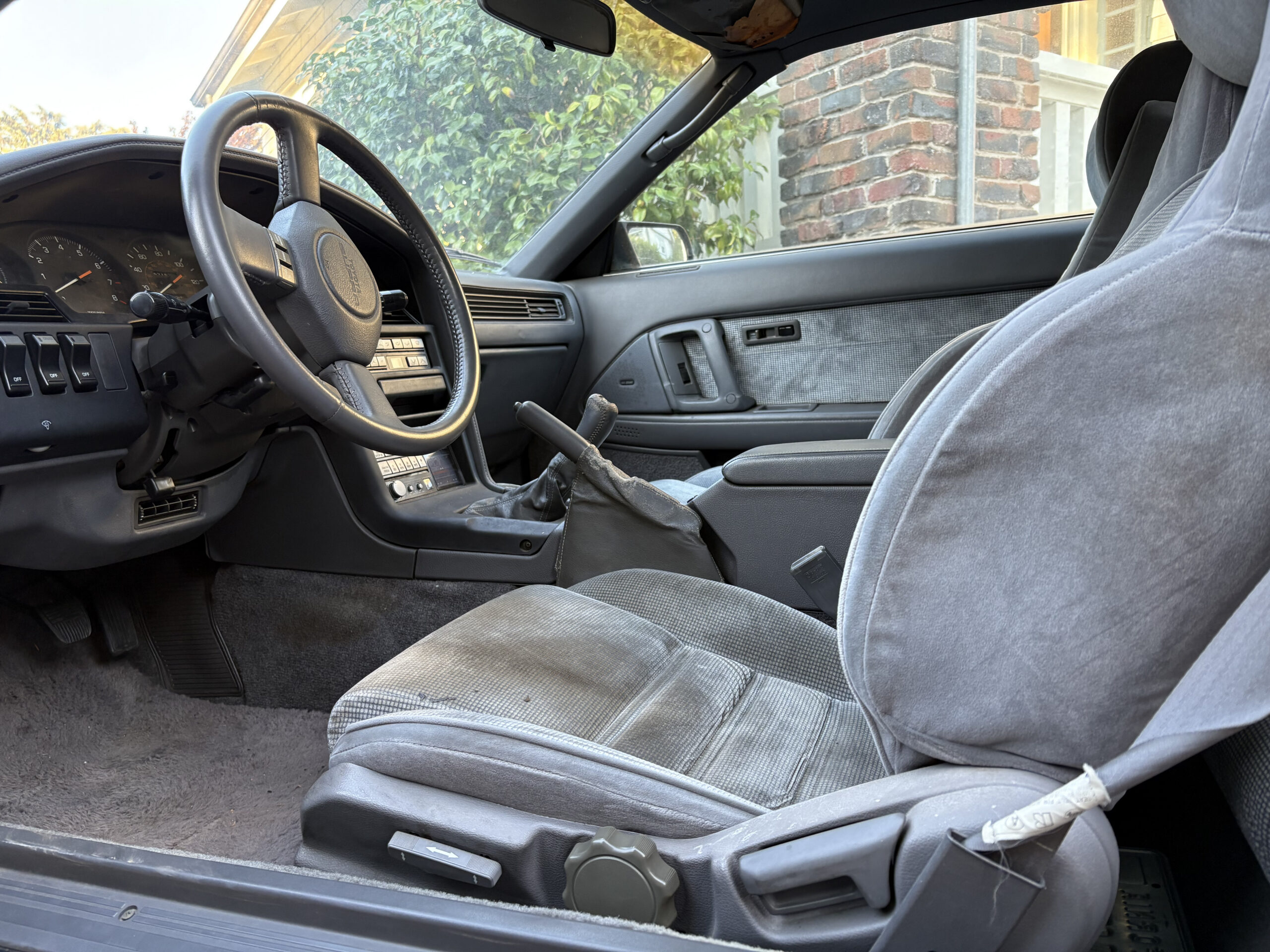
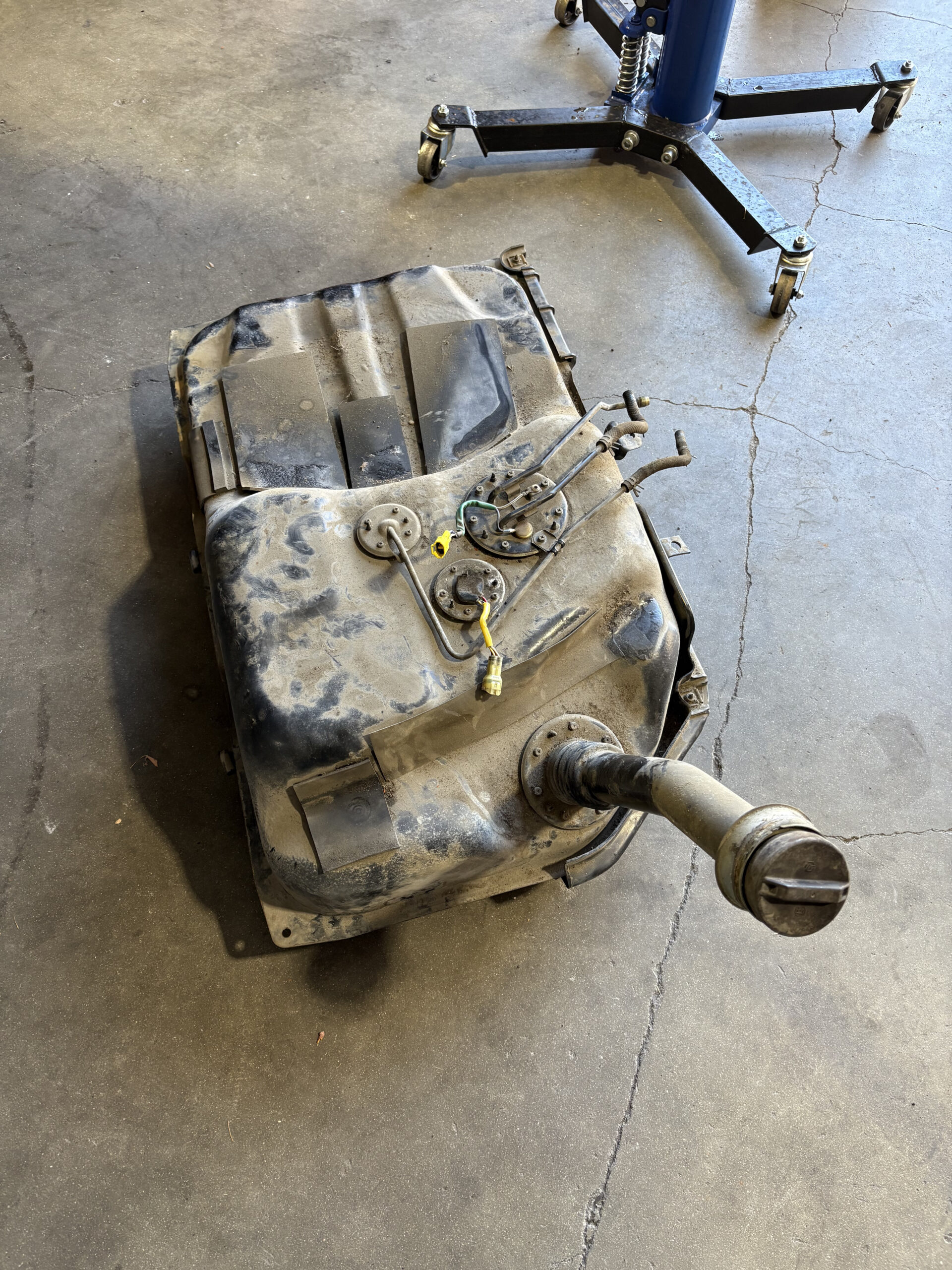
Unlike most cars today, the fuel pump isn’t easily accessible on the MK3 Supra. The fuel level sender has an access panel in the trunk, but for whatever reason the pump itself requires dropping the tank to replace (not very Toyota of Toyota…). Fortunately Toyota didn’t make the tank removal a total bear, as it came out in about 30 minutes after undoing some electrical connectors, a few fuel lines, and the main saddle straps. I will say having a lift was handy in this instance as dropping the tank on jack stands would have been a clumsy process.
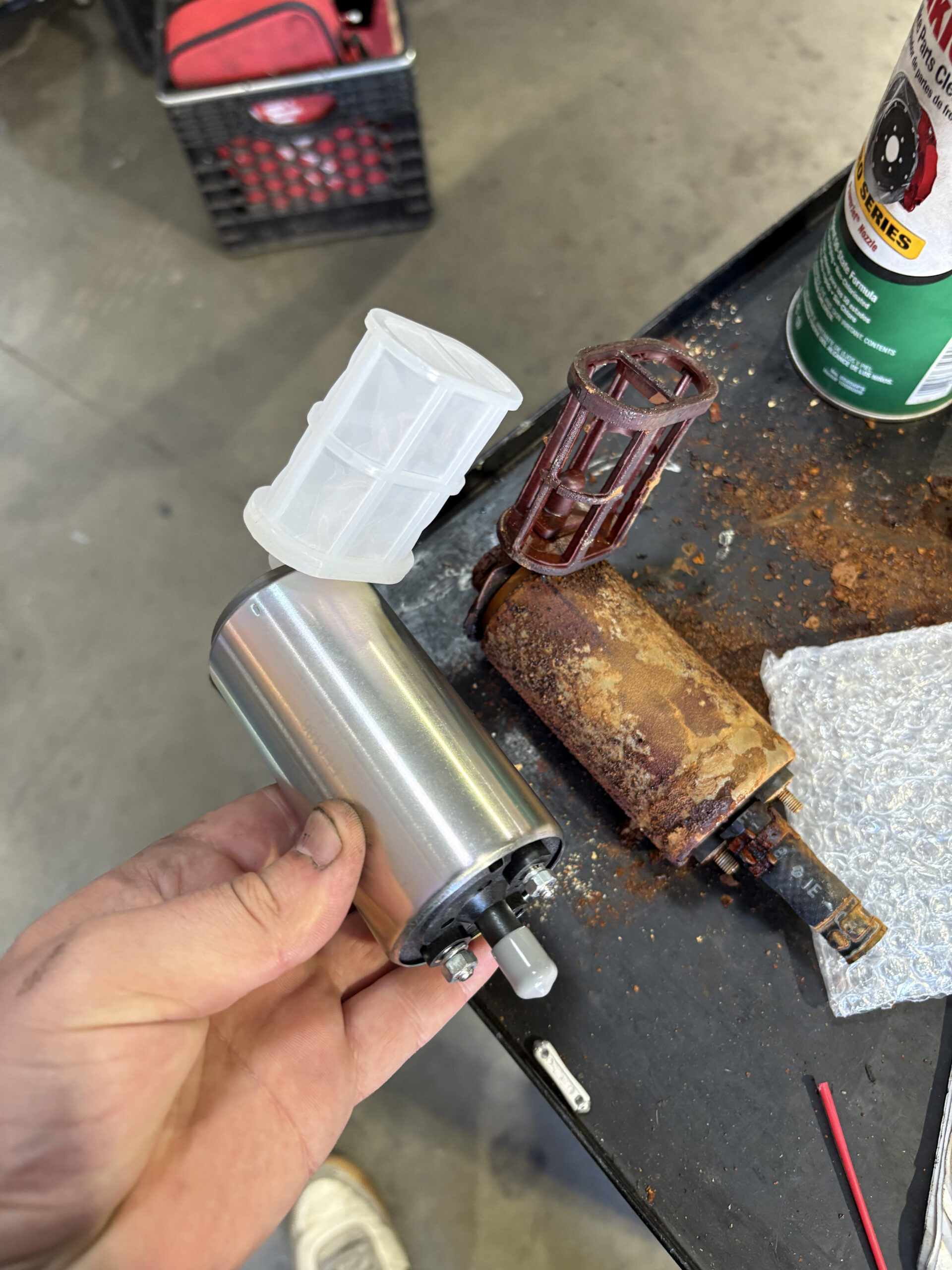
Once the tank was out of the car I pulled to pump only to find the remnants of the HMS Titanic inside. The frame of the pump was completely covered in rust and the filter sock was nonexistent. I had to drain the old fuel and clean the residual sediment from the tank, which took several rinse cycles before it was deemed acceptable. After a parts store run, I came back to install the new pump assembly into the tank, then got the tank itself reinstalled back into the car. I borrowed some gas cans to get some fresh dino juice from the station down the street, filled the tank, and started to crank the old 7M engine over…
After a few minutes of cranking to re-prime the fuel system, the “Toyota 3000” calmly roared to life. I was surprised how quiet of a car it was – then again it’s the same running gear as the very mundane Cressida, aka an oversized Camry. Oh well, at least it was running and idling without any major issues.
Smog Gamble
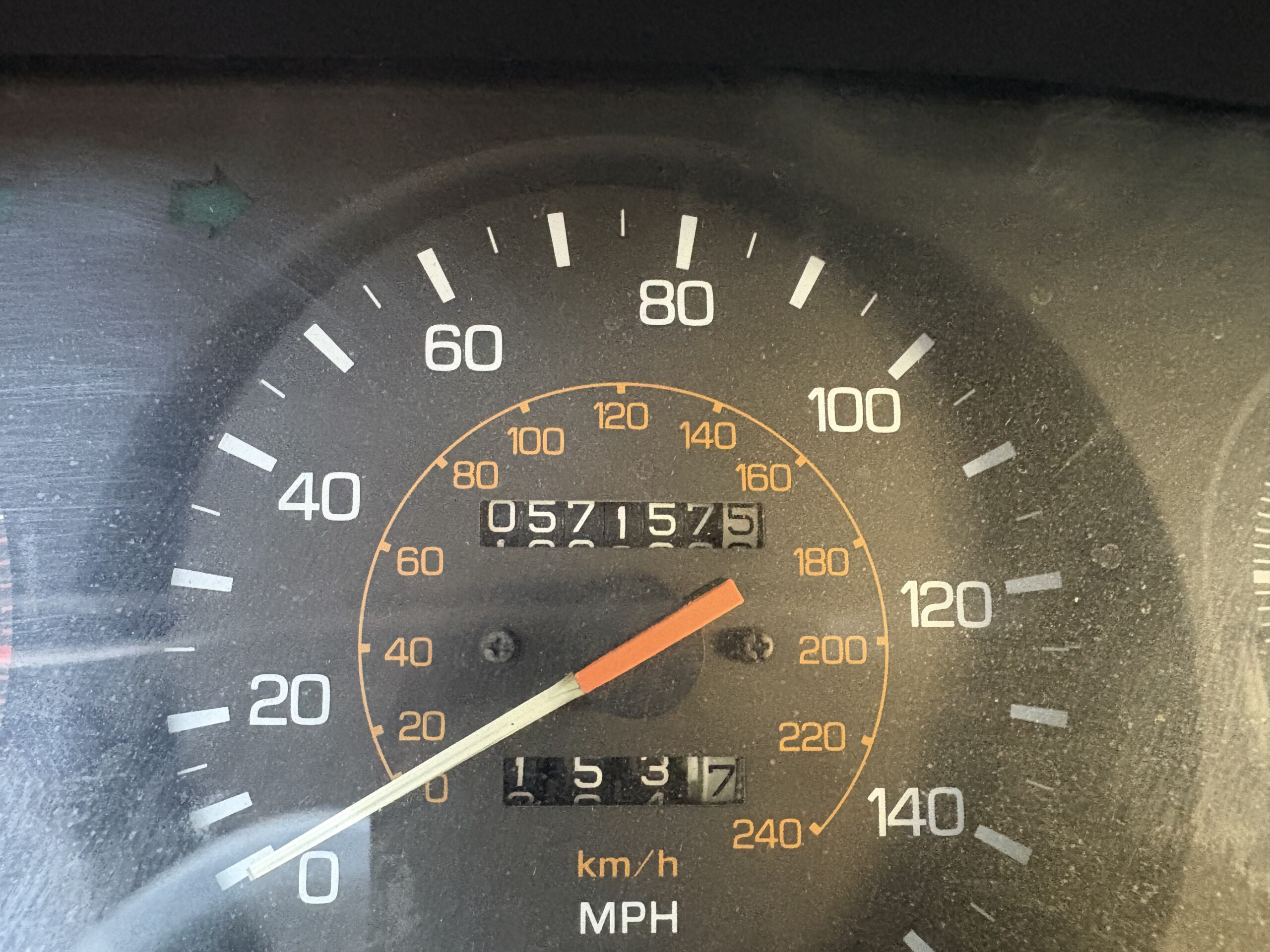
Now that the Supra was running, the next order of business was to see just how bad it failed smog. The rationale being that we’d have an indicator of what needs to be addressed. With just 15 miles on the clock (and some very aged out tires…) the Toyota hopped on the smog rollers.
Proving Toyota’s bulletproof build quality, the Supra passed on its first attempt, which is ridiculous given the car hadn’t been driven in 15+ years. Either the low mileage meant the catalytic converter was in good shape or the engine was healthier than anybody had anticipated. Regardless of the answer, a passing test meant a fresh registration sticker was en route from the DMV.
Not long after the smog test though, the clutch pedal lost pressure and was stuck on the floor. Time for TLC in the general maintenance department.
Refreshing Mr. T
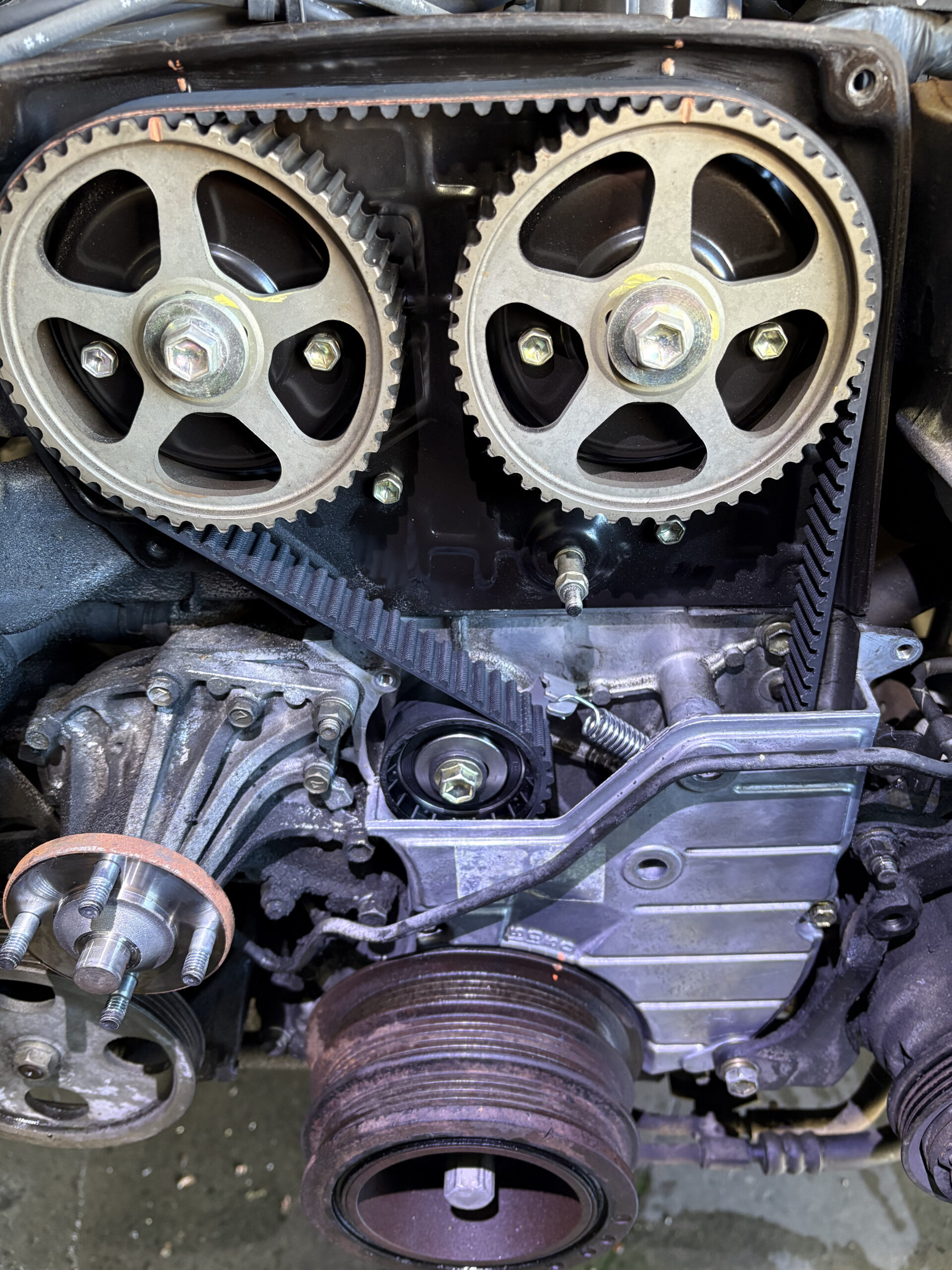
Any car that has been sitting for an extended period of time is going to need a good chunk of work before it’s truly roadworthy once more. In this particular case we knew the timing belt was original, so that was changed immediately. Fortunately the 7MGE is a non-interference engine, but that doesn’t mean we should risk depending on a 40-year old timing belt. During the timing belt and tensioner change, the water pump, v-belts, valve cover gaskets, and radiator hoses were replaced as well. The old oil was also drained and refilled with fresh 20w50.
As mentioned before, the clutch pedal fell to the floor not long after the smog test. A quick inspection pointed to a leaky clutch slave cylinder and hose. So those were replaced and it got me thinking that the brake lines were probably worse for wear. And would have believed that 40 year old brake lines were not exactly showroom fresh? So those were replaced as well along with the pitch black brake fluid. The rotors and pads were not looking great either, but they would suffice for the time being as they weren’t worn out.
A mystery coolant leak was also addressed spewing out the side of the block. Under normal circumstances that would be bad news, but it turns out a rubber plug had simply deteriorated causing the small coolant geyser once up to temperature. Since the turbo model wasn’t ready for production when this car was built, the provisions were added to the block itself for turbo’s cooling system, but the early cars were only available as N/A models for the first 6 months. Five dollars later the leak was fixed with a new plug and hose clamp. Why can’t all jobs be that easy!
The Toyota’s Next Chapter
Once all the repairs were completed, the Toyota went back into storage and was eventually handed down to Wayne’s grandson. Fortunately the mechanical bits were sorted, but the paint was still trashed from years of baking in the sun. However it has been decided that the car would get a repaint to bring the cosmetics back to a presentable state. Up until recently I had thought the car was grey, when in actuality the original color is jet black. I guess my vintage Toyota knowledge is quite lacking…
With the repaint in the works, the Supra will soon look factory fresh. As to what else is in store for the car’s future is still to be decided. Maybe it’ll remain stock, or perhaps it’ll get a big ol’ snail installed to make it a proper highway powerhouse. At the end of the day, at least it’s getting a new lease on life, and will be fun to see it cruising around once more. If we’ve learned anything from this adventure, it’s that there are plenty of interesting old cars waiting to be revived to begin their next chapter.


![[Project Toyota 4×4] Transition of the Transmission](https://drivewerks.co/wp-content/uploads/2017/03/IMG_20170309_170158-140x90.jpg)
![[Project Toyota 4×4] It was all in your Header](https://drivewerks.co/wp-content/uploads/2016/11/IMG_20161127_161318-140x90.jpg)
![[Project Toyota 4×4] The 22R Finally Warms Up To Us](https://drivewerks.co/wp-content/uploads/2016/09/DSC_0692-140x90.jpg)